
Custom Fabric Expansion Joints for Industrial Applications in Australia
Future Thermal, based in Dandenong South, Melbourne, manufactures custom fabric expansion joints for customers across Australia. Our non metallic expansion joints are engineered to handle movements from thermal growth, vibration, positional mismatch and other dynamic forces commonly found in low pressure, high movement industrial systems. As specialists in fabric bellows, we tailor each solution to the specific temperature, pressure, gas composition and dimensional needs of your site.
Understanding Fabric Expansion Joints and Their Function
Fabric expansion joints, also known as industrial fabric bellows, are flexible connectors fitted into ductwork. They absorb movement and reduce stress between duct sections, helping keep the system sealed and reliable.
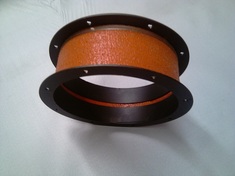
Movements Accommodated by Fabric Expansion Joints
- Axial Movement: Expansion and contraction along the length of the duct.
- Lateral Movement: Side to side shifting from thermal effects or structural forces.
- Angular Movement: Bending or pivoting between connected duct sections.
- Vibration: Damping oscillations to lessen stress on ductwork.
- Thermal Expansion: Dimensional changes caused by elevated temperatures in pipes and ducts.
By flexing under these conditions, fabric expansion joints preserve airtight connections and extend service life.
Contact Us For a Quote Today
Call us on 03 9792 2227
or fill in the form below
Advantages of Fabric Expansion Joints over Metallic Bellows
Fabric expansion joints suit many situations where metallic bellows are less practical. They perform well in low pressure environments that demand high flexibility. They accommodate multi directional and complex movement with less weight, making them easier to handle and install. With the right layer construction, they resist corrosive gases and particulate wear. For many applications exposed to harsh conditions, they offer a more cost effective replacement option.
Printable Information Data Sheet –
 fej_email.pdf
Download File
Design Considerations and Material Selection for Fabric Expansion Joints
Our design process starts with a careful review of your operating parameters, so the chosen materials and construction method match real world conditions.
Key Operating Variables Influencing Design
- Operating temperature range, including requirements for high temperature joints.
- System pressure and vacuum conditions.
- Gas composition, covering chemical aggressiveness, moisture and particulate load.
- Expected movement types and cycle frequency.
- Size and geometry of the duct or pipework.
- Connection and attachment methods such as flanges or clamping.
Typical Layer Construction and Materials Used
Fabric expansion joints are built from multiple layers to deliver durability and function. A flexible backing fabric provides structural strength. A sealing layer resists the effects of conveyed gases and operating temperatures. Optional insulation layers help manage heat and reduce leakage. Our experience ensures each product meets Australian industrial standards and the demands of your application.
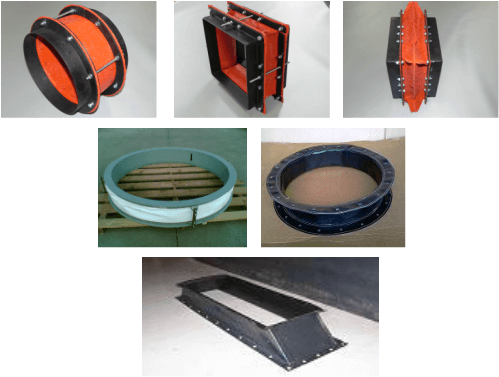
Shapes, Construction, and Associated Steelwork Services
Future Thermal engineers fabric expansion joints in round, square and rectangular profiles to suit common duct shapes. We also provide steelwork design and fabrication that integrates with the expansion joints for easier installation and smoother operation. With more than 28 years of combined staff experience, we support projects from first consultation through workshop fabrication to on site installation.
Applications and Industry Use Cases in Australia
Our fabric expansion joints are used across power generation, manufacturing, mining and chemical processing. Typical projects include replacing worn duct expansion joints in demanding conditions and responding quickly to emergency breakdowns. We use precise measurement and data gathering to deliver accurate, dependable results.
Replacement, Emergency Support, and Technical Consultation
Our emergency breakdown team is available 24 hours a day, 7 days a week, to replace or repair fabric expansion joints and minimise downtime. To help us respond faster, please provide measurements of the existing joint or system, clear photographs and site details, and operational information such as temperature ranges and gas composition.
We aim to provide reliable support for industrial operations throughout Australia.
Request Technical Advice or a Quote for Fabric Expansion Joints
For new or replacement fabric expansion joints, request technical advice using our online RFQ form. Include details on movement requirements and operating conditions, dimensions and duct profiles, and any special factors such as chemical exposure or elevated temperatures.
Download our printable data sheet and contact Future Thermal for expert guidance.
For more information, visit our industrial textiles and insulation page, and our specialty fabrications page. You may reach us anytime via our contact page.